Toughened glass

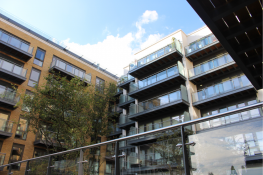
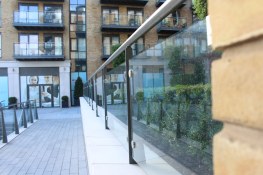
Toughened glass is now required by regulation for every building project due to its increased strength and safety characteristics.
When all proprietary operations are completed from drilling, notching, edgework including any printing if required, the glass is passed through our oscillating furnace and heated to around 630 C. Once the heating process is completed, the glass is transferred to the quenching chamber where it is rapidly cooled. The structure of the glass is then transformed creating very high permanent surface compressive stress. In conclusion, if the glass is broken the contained stress is released and results in the glass breaking into small harmless particles. The glass also becomes stable against thermal fracture caused by partial shading once in situ.
Specification Details
Please note that these product properties are not a replacement for the manufacturer's literature and it is always recommended that ToughGlaze is consulted before specifying.
 Size & Weight
|
||
| Length (?) | 6000 mm | |
| Thickness (?) | 4 - 19 mm | |
| Width (?) | 2800 mm | |
 Other
Other
|
||
| Uniclass (?) | Pr_25_71_33 Glass and glazing sheets and profiles | |
 Certifications & Ratings
|
||
| Standards (?) | EN 12150 , EN 12600 , EN 572 | |
 Commercial
|
||
| Typical Building Sector (?) | Commercial , Domestic , Leisure , Transport | |
 Materials & Finishes
|
||
| Glazing Type (?) | Toughened Glass | |
Similar Glass Products

Contact

Contact
Contact